Export Planning 101: Paid Ads and SEO for Exporters

An export marketing plan has many different components to it, from social media to website design. Utilizing SEO (search engine optimization) and paid ads are two ways to ensure you’re optimizing the reach of both your social media and website content. We’ll cover how you can build brand awareness through SEO and paid ads – drawing on insights from a previous webinar, “Digital Marketing for Exporters,” hosted by Export Navigator and presented by Tiny Planet Digital.

When you google what your company does, how does your website rank in the search results? For example, if you were a gluten-free snack company and you looked up “gluten-free snacks BC”, would you be on the first page after you hit search? As you can probably guess, it’s not ideal to be on the last page of hundreds upon thousands of search results. This is where SEO comes in to lift your website out of digital obscurity. 

One common way to improve your website’s SEO is by making sure you’re using relevant keywords. Using the gluten-free snack example, other keywords or phrases that the company’s website might use include: organic; vegan; plant-based, ways to use + product, where to buy + product, etc. 

However, it’s not enough to pick keywords at random – you’ll need to do research to determine the best ones for your company. “Vegan” is a great keyword to have, but it’s also highly competitive. Remember to not overlook keyphrases and use long-tail keywords, which is a more specific search that is usually longer than a simple keyword. For instance, a common search on Google is “where to find [product].” This indicates a search where someone is wanting to make a purchase. So, one of the web pages could include “how to find gluten-free snacks in B.C.” as a keyphrase woven into its copy. 

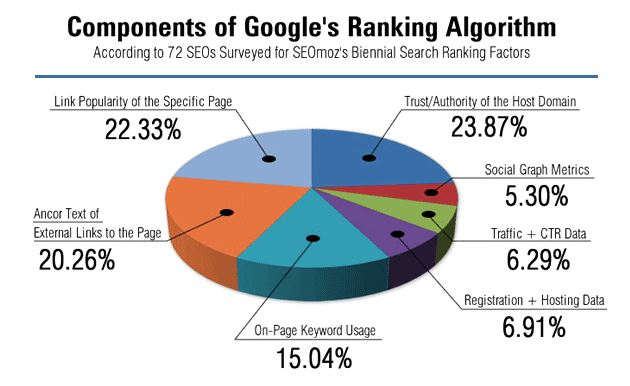
Keywords are a substantial part of ranking on Google. Source: Quick Sprout

Preliminary keyword research can be done in multiple ways. Here is a step-by-step guide from Hubspot to get you started: 

  • Make a list of important, relevant topics based on what you know about your business and target audience

When you think of a gluten-free snack company, you may relate it to topics like health, wellness, or a certain diet. 

  • Fill in those topic buckets with keywords/phrases

These keywords/phrases could be something more specific but still health-related – for example, “organic” or “vegan,” as mentioned earlier.  

  • Understand how searcher intent affects keyword research and analyze accordingly 

Some words or phrases can have multiple meanings. If you’re unsure of what using a specific keyword implies, try typing it into a search engine to see if the results are relevant to your business. 

  • Research related search terms

Google often shows search terms related to what you just looked up. This is a great indicator of other keywords that people are using to find the same thing. 

Online tools can help you find keywords as well. Some popular ones are listed above. 

Other SEO tips are to publish high quality content that is relevant and authoritative. Ensure it’s regularly updated to maintain relevancy, as search engines favour updated content. Cross-linking to other sites with credible and relevant information is another way to improve your SEO while adding value for readers. 

Paid Ads

The next component of building brand awareness online is through paid ads. With paid ads, you’ll make contact with shoppers in various stages of the customer journey. You can set different objectives and design ad campaigns so they serve your goals, whether it’s to make sales, increase brand awareness, or to educate. 

Popular channels for paid ads differ by region but here in North America, a few common ones are Google, Facebook, LinkedIn, and YouTube. Again, choosing your channel(s) boils down to your target market and doing market research to know which networks are most suitable. If you read our last post on building brand awareness, you’ll know that many markets in East Asia have their own local social media and video platforms that are musts for reaching a new target audience.

It’s also helpful to note where your organic social media content is performing best, as you’ll want to advertise there. For an in-depth look at each type of ad that many platforms offer, read this guide from Hootsuite. Ads can take on a variety of forms, such as interactive games, carousels, or story ads. 

After finalizing your paid ad campaign, don’t forget to track its performance! Some KPIs (key performance indicators) to watch for include:

  • Impressions (the number of times a user comes across your ad)
  • CTR (Click through rate)
  • Landing page views
  • Conversions (such as purchases)

On the fence about pursuing paid social? Here are some reasons why paid social media is worth it for exporters who are trying to establish a customer base in a new market: 

  • Paid social gives your business guaranteed reach
  • It allows you to target your most relevant customers
  • It teaches you about your target audience with in-depth insights that are more detailed than organic social analytics

Learn more about exporting 

Looking for more in-depth, introductory exporting content? We periodically host webinars on a wide range of exporting topics – stay tuned to our event page for the next one! You can also sign up for our newsletter to get updates on upcoming Export Navigator webinars, events, and resources. 

Meet Shannan: Export Advisor for Indigenous-owned Businesses

Indigenous History Month is an opportunity to recognize the “rich history, heritage, resilience and diversity of First Nations, Inuit and Métis Peoples across Canada.” This includes recognizing the accomplishments of Indigenous businesses, many of which still face barriers to success. Economic inclusion is crucial for making impactful change on B.C.’s economy. At Export Navigator, we aim to fill the gap of much-needed business planning services and export resources for underrepresented groups in business.

Export advisor Shannan Schimmelmann supports Indigenous businesses in B.C. directly. She has years of experience working with Indigenous entrepreneurs in traditional economies and other industries. In this interview, we talked to Shannan to learn more about how she helps Indigenous businesses access new markets.  

Export Navigator: Can you please introduce yourself and your role as an export advisor? What kind of businesses do you mainly work with? 

Shannan: My name is Shannan Schimmelmann, export advisor for Indigenous-owned businesses with the Export Navigator program. I am happily married and a mom of two daughters. I proudly acknowledge that I have lived in Treaty 8 Chief Drygreese Territory, Treaty 7 Southern Alberta Blackfoot Territory, and Treaty 9 traditional territory of Ojibway/Chippewa, Oji-Cree, Mushkegowuk (Cree) and Algonquin. I have resided in the unceded ancestral lands of the Syilx Okanagan territory since 2007.

As an export advisor, I guide my clients on their journey to grow beyond the province. I work with clients to assess their export readiness and capacity, identify business goals, and develop a plan to export. My role is to facilitate resources to answer any questions or challenges that arise throughout the export process. I’m involved in every aspect of my clients’ business, such as reviewing export and business plans, contracts, marketing materials, grant applications, or HR policies to provide feedback.  

EN: Can you talk a bit more about your professional background and how it ties into your current role? 

Shannan: I graduated from the Executive Management MBA program at Royal Roads University in Victoria, B.C. in 2010. I started my career in the Northwest Territories focused on economic and business development. Some career highlights include participating in trade missions to Germany, Netherlands, United States and New Zealand.  

I am a serial entrepreneur – I’ve founded three companies, a consulting practice and a social profit organization. These experiences have all contributed to my skill set as an export advisor. My strengths include supporting well-developed market entry strategies, relationship building, contract negotiation and facilitating business partnerships. 

I have always lived in regions where the natural resource sector is a big part of our economy, from mining, and oil & gas to tourism and traditional economies: hunting, trapping, fishing, arts & crafts. I’ve spent many years immersed in the tourism and hospitality industries.  

EN: What do you look for in a business to determine if they are ready to grow beyond B.C.? 

Shannan: Typically, I suggest that new clients complete the Export Navigator workbook export readiness assessment. This provides a great starting point for our discussion so I can better understand their business goals, needs and challenges. 

Taking that initial conversation into account, a few things I look out for are if a business has a(n):

  1. Updated business plan
  2. Financial plan and cash flow forecast
  3. Marketing plan
  4. Trusted business mentor

EN: Aside from being an export advisor, what else do you like to do in your free time? 

Shannan: When I’m not working with entrepreneurs, I love spending time outdoors with family and friends, and traveling. I am a very active member of my community and serve as the current Vice President of Kelowna Women in Business. I also volunteer with HOPE Outreach supporting our vulnerable homeless sisters. 

EN: Do you have any memorable client stories that you can share with us? 

Shannan: I have had a few success stories over the past year as an advisor with Export Navigator. One business that stands out for me is Up The Hill at Loakin. Named in honour of the region where her parents grew up, June Anthony-Reeves launched Up the Hill at Loakin in 2018. Based in Chase, June harvests traditional Indigenous plants in the Neskonlith area. She uses her formal and cultural herbalist training to create botanical medicines and natural personal care products.

With the support of Export Navigator, June is now expanding Up the Hill at Loakin to ship products to Australia, Germany and beyond. I’m so proud of June and Up the Hill at Loakin’s success – from helping them participate in a virtual trade mission to enlarging their professional network, I’m very happy with how far they’ve gone in their export journey. She’s since developed a new sales program, welcomed three new wholesale customers and increased their manufacturing capabilities. 

Up the Hill at Loakin is one example of why being an export advisor can be so fulfilling. I love hearing from clients saying that my connections and referrals have resulted in new opportunities, sales and clients. 

Learn more

Thinking of exporting? Find an advisor in your region today and discover what opportunities are available to you.

Export Planning 101: Finding Buyers & Handling Logistics

In this second part of our “Export Planning 101” series, we’ll outline the next sections that your export plan should include: finding buyers and partners to help with the export process, and transportation and logistics.

To recap from our last blog, “Export Planning 101: Finances,” an export plan is an extension of your business plan. Having a strong export plan increases your chance for success in new markets – that’s why we’re here to help you create a comprehensive plan of your own!

Finding partners and buyers

Once you’ve identified your target market(s), the next step is finding partners and buyers. In your export plan, address how you are going to find buyers, communicate with them, and vet them to ensure they’re legitimate.

The process for finding partners and buyers outside B.C. isn’t far off from how you would find buyers at home. Some questions to ask yourself are:

  • What type of customer are you selling to?
  • Who sells to your target customers and how?
  • Which channels are already successful for your product/service?

Through your answers, you will gain a better idea of the contacts you’ll need in your network. Social media plays a huge role in meeting and cultivating relationships with potential buyers and partners. A great starting point for building your export network is on LinkedIn. Use it to reach out to your personal network and ask for introductions to contacts in your sector and target market. You can also find industry groups and agents in your sector on LinkedIn.

Even if you don’t currently have contacts in your target market, you can easily start growing your network online. When the relationship is strong enough, it’s recommended to eventually have an in-person meeting with your potential buyer.

There are other resources to utilize, such as industry and trade associations like the Chambers of Commerce or BC Food & Beverage. They might host trade shows or webinars that are opportunities for you to meet others in your industry. Lastly, traveling to your new target market for hands-on research is always beneficial, as you’ll be fully immersed in the culture and environment. You may find B.C. provincial or Canadian government representatives there that can connect you with potential buyers and help with the overall processes.

Transportation and Logistics

Transporting your goods to your buyer involves extensive planning to make sure everything goes smoothly. Referring to internationally recognized rules like the Incoterms® rules help traders avoid costly misunderstandings. They clarify the tasks, costs and risks involved in the delivery of goods from sellers to buyers. It’s essential for buyers and sellers alike to familiarize themselves with Incoterms.

For transportation, exporters typically employ a freight forwarder and/or customs broker to help choose how to transport your product and reduce your workload. This is an important decision to make, as a mistake in logistics or customs can be extremely expensive. There are many variables to consider, like the size and weight of your goods, when it needs to arrive at its destination, the cost of shipping, and any other special requirements.

A freight forwarder is a person or company that helps manage delivery modes and costs. They can assist with logistics including paperwork and documentation. A customs broker is regulated by a country’s border agency – if you were to ship to another country, a customs broker would help you clear customs once your shipment arrives and ensure compliance with foreign border requirements.

During transportation, and upon your goods’ arrival at its destination, you should take several factors into account. Do your goods need to be temperature controlled? Do you have any perishable items? How quickly does your buyer need the product to arrive? This may require special arrangements for warehousing and transportation, depending on what you’re exporting.

Prepare to plan your timeline well in advance, because getting all the required documents could take longer than expected. Another consideration is if you need to make product or packaging modifications. For example, you may need to change the packaging to another language or design that appeals more to your new market. This is a topic we’ll cover in our next blog – what to include in your export marketing plan.

Get started on your export plan

It’s never too early to start on your export plan. Our export advisors make taking the first step easier and will demystify the export process along the way. Speak with an advisor today and grow your business beyond B.C.!

How To Choose A Target Market

In our latest exporting blog, we introduced the criteria for assessing your business’ export readiness. Next, you’ll need to identify your new target market. Choosing the right market(s) to export to is a big decision. It determines where you will focus your resources, as well as the development of your export plan. In this article you’ll learn about the basics of export market identification: how to start, research questions to ask, and online tools to guide you on your way. 

Identifying potential bridges to new markets

Many factors go into choosing the best target market for your business. An important one is who you know. Without a dependable network of contacts to help you navigate an unfamiliar market, exporting could be more challenging. The good news is, you likely already have personal connections right here in your hometown. Perhaps you have cultural connections to another market through an employee who speaks multiple languages. Or maybe you know someone who lives out-of-province in a market that you’re interested in. These are all valuable contacts for getting your foot in the door of a new market. 

Your international network can also be strengthened by connecting with like-minded businesses or experienced exporters. Networking can lead to new opportunities, ideas, collaborations, and more. Start by initiating coffee chats over LinkedIn, attending seminars, webinars, and business networking events. 

Sometimes, your export contacts will find you first. Many businesses begin exporting because they’ve been contacted by someone from a potential new market. Whether it be a consumer, wholesaler, or agent, these inquiries will give you insight as to where interest in your business comes from. 

Lastly, you may have domestic competitors who are exporting. Researching your competitors allows you to learn about new target markets with similar consumers. This way, you won’t have to look far to get an idea of what market makes the most sense for your business. 

Researching your new market

After reviewing information from your network and preliminary research, compile a short list of three to five potential new markets to explore. From there, you’ll need to do further research to know if you’re on the right track.

The Canadian Trade Commissioner Service is an informative resource on the three basic stages of international market research. As the article mentions, there are two types of research. Here, we will focus on secondary research, which involves using data sources that can be found online. After completing secondary research, you can reach out to your contacts for more information through interviews and consultations – this is known as primary research. You can even use primary research as an opportunity to network with importers or buyers in your target market.

For online research, a good starting point is to discover the top export markets for your sector through analyzing trade data. Try collecting and recording statistics on your sector’s exports to various countries. 

Here are a few free online tools for finding trade data: 

Trade Data Online Allows you to generate customized reports on Canada trade in goods with over 200 countries and find new export markets. 

Trade Data – Available on the B.C. provincial government website. Find all sorts of trade data specific to B.C., as well as trade profiles of other countries.

Country and Sector Information for International Business – The Trade Commissioner Service offers a comprehensive list of general market information that you can sort by country or by sector. 

Research Questions

Now that you have the resources you need to piece together your list of top target markets, you should consider your research questions.

Below are a few of the topics you should familiarize yourself with on your target market(s): 

  • Attitudes towards Canada and Canadians
  • Demand for your product/service
  • Potential customers
  • Culture 
  • Language
  • Economic conditions
  • Political stability
  • Foreign competitors in that market
  • Government regulations

Keep in mind that markets aren’t necessarily defined by country. Within Canada, for example, there are various markets outside of B.C., so don’t forget to consider exporting interprovincially in addition to international markets! 

Narrowing It Down

The last step to identifying your export market is to narrow down your list. From your three to five options, we recommend choosing just one market to begin with. Consider your options carefully – now that you have the tools to make an informed decision, you can save time by pursuing the best market for your business, right off the bat! After gaining experience, you’ll have the confidence and knowledge to tackle another market down the road. 

Choosing a target market can be a daunting task, which is why having expert guidance can be a huge reassurance. Export Navigator can help – the program supports you with everything from networking opportunities to providing resources for your industry. Talk to an export advisor today to grow your business beyond B.C. 

Meet Brady: Export Advisor For Vancouver Island North

Having a strong support system is crucial to any entrepreneur’s success. Export Navigator fulfills that need with our team of trustworthy and experienced export advisors across B.C.

Get to know our advisors better through our “Meet the Advisor” blog series. We’ll be interviewing each advisor about their background in exporting, entrepreneurship, and more!  

In this blog, we spoke to Brady, Export Navigator’s advisor for Vancouver Island North. Brady started becoming familiar with the exporting world right out of high school, where he worked at a robotics company. After being in the robotics business for 6 years, he started pursuing other entrepreneurial endeavours. Today, he’s helping other small business owners realize their potential. 

Export Navigator: Can you please introduce yourself and what you do as an export advisor?

Brady: Hi, I’m Brady and I am the export advisor for Vancouver Island North. My region includes the Northern Gulf Islands and the Sunshine Coast from Saltery Bay to the north. I am based in Nanaimo, where I also run my consulting firm for entrepreneurs who want to grow their business.

As an export advisor, I work with rural B.C. businesses and teach them how to enter new markets. My clients range from those who already have some experience with exporting to those who are just starting out.

Export Navigator: How did you get into international business/exporting?

Brady: I started out working in robotics at a global company after graduating from high school. My position at the time was in shipping and receiving, so that was my first exposure to the exporting world. I eventually worked my way up the company and started its sister company called Crystal Cam Imaging. My responsibilities included overseeing the company’s expansion into international markets, where there was significantly higher demand. 

I ran Crystal Cam Imaging for 6 years before selling it and then joined Export Navigator as an advisor. Being an export advisor really requires you to have familiarity with what small business owners do on a day-to-day basis. My experience with running a global robotics business and starting my own consulting firm allows me to easily relate to my Export Navigator clients. I know what the ups and downs of being an entrepreneur are like – that’s why I enjoy using my knowledge to help people through their journey.

Export Navigator: Is there a memorable/ successful client story that you can share with us?

Brady: I would say any client that expresses passion for what they do is memorable to me. It usually means they’re willing to put in the work in order to grow. Being able to go out of your comfort zone creates new opportunities, which is a large part of what exporting involves.

One example of a client that showed this willingness to grow is InWater Technologies in Campbell River. Throughout our time working together, they were always receptive to feedback and took initiative to improve their business. Their dedication to exporting paid off when they had successfully secured funding from multiple sources. 

Export Navigator: What do you look for in a business to determine if they are ready to grow beyond B.C.?

Brady: The most important thing to look for, in my opinion, is whether they have the drive to achieve their goals. Of course, as an export advisor, we’re here to cheer you on and provide support every step of the way. At the same time, the business should be fully committed to exporting and all that comes with it.

A common misconception is that you need a lot of money to export, but with the right attitude and the right people in your corner, you will be surprised at how far you can go.

Export Navigator: What piece of advice do you have for aspiring small business owners?

Brady: Exporting can sound intimidating, but it is easier than it seems. Export Navigator takes a huge load off your shoulders because you don’t have to worry about whether you’re going in the right direction or not. We lead you to all the right resources and the right people, something that small businesses often have trouble finding. 

Also, taking advantage of your network is extremely beneficial. I’ve found the small business community to always be helpful and welcoming.

Learn more

Thank you to Brady for taking the time to speak with us and for his thoughtful answers. To learn more about all the export advisors on the Export Navigator team, look on our website.

Find an advisor in your region today and discover what opportunities are available to you. 

Assessing Your Business’ Export Readiness

So, you’ve read about the challenges and opportunities of exporting and know all about exporting as a growth strategy. You’ve also learned about the stages of exporting and are aware of what it entails. That brings us to the next step: your export readiness assessment.

Export Navigator outlines four categories that can help determine this: personal self-assessment, general export readiness, sales within B.C., and product or service assessment. The questions in these categories can provide insight on where you are in your export journey and help identify areas where you might need additional support. 

Personal self-assessment

Why do you want to sell outside of B.C.? Maybe you want to meet demand for your product or service elsewhere. Or, you might not even have a clear answer yet and just want to learn more, which is fine. 

Your personal self-assessment not only includes yourself, but your team as well. There are more responsibilities that come with exporting, and it’s important to make sure that everyone is on board. 

Answer the following questions to evaluate how you and your team feel about exporting: 

  • Are you or key employees willing to adjust to a potentially unfamiliar business culture?
  • Are you willing to make the time and financial commitment?
  • Do you have approval from management and other stakeholders to pursue exporting?

Business assessment: export readiness

Once you and your team have decided to start exporting, then the next thing to assess is your business. The following questions will help you figure out what you need to prepare before exporting:

  • Does your business plan include exporting?
  • Do you have target markets in mind? 
  • Do you have experience with selling outside of B.C.?
  • Are you familiar with export service providers and requirements?

You’ll eventually need more resources to help expand your business, which include hiring, production, marketing, and so on. Incorporating these factors in your plan makes it easier to accurately gauge your business’ capacity to export.  

There are a lot of associated costs with exporting. For instance, you might want to consider insurance for shipping losses, non-paying foreign customers and contract cancellations. You’ll also need to travel to your target market to do business, and attend trade shows or meetings outside of B.C.

Business assessment: sales within B.C.

The third step is to take a closer look at your existing market and finances before identifying a new target market. What are the demographics of your customers and who are your competitors? Compare and contrast your domestic market with your new target market, and determine what you need to change in order to tap into your new market.

Be prepared to adapt. The demographic your business normally caters to in B.C. may vary from market to market. Use these questions to assess your sales within B.C.:

  • Are your sales in B.C. declining, staying steady, growing steadily, or growing very rapidly?
  • How diversified are your sales in B.C.?
  • If you sell online, what are your top 3 online markets?

Product or service assessment

Last but not least, it’s time to assess your product or service. Some markets are more feasible to enter than others, so it is wise to narrow down your choices. Depending on your new market and your industry, there could be restrictions and regulations that differ from B.C.’s. 

For example, in manufacturing, production lines must produce in the metric system to meet European Union standards. If you want to export food, pharmaceutical, or cosmetic products to the United States, it has to first be recognized by the United States Food and Drug Administration (FDA).

To help determine if your product or service is ready to export, answer the following questions:

  • Does your business comply with the regulations of your new target market? If not, can you easily bridge the gap? 
  • Does your product or service require any type of certification? Is it recognized internationally?
  • Are you willing or able to modify your product or service to sell into another market?

Making the most of your export readiness assessment

This export readiness checklist is meant to provide you with an example of things to look for before you commit to exporting. However, it is not an exhaustive list. For a more in-depth checklist, talk to an export advisor for a free consultation. 

Keep in mind that becoming export ready is a long process – patience is key! Your advisor can help assess your needs and get you on track to meet your goals. 

Meet Amber: Export Advisor For Businesses In Thompson-Okanagan

Export Navigator is made up of our network of experienced and knowledgeable export advisors throughout B.C. Our export advisors take on multiple roles every day to help their clients reach their full potential, but not many are aware of all that being an advisor involves. That’s why we’re here to showcase our advisors’ unique strengths and personalities in our “Meet the Advisor” blog series!

Amber Hunter is one of our talented export advisors who has an especially vast portfolio of work in the tourism and food & beverage industries. Being an entrepreneur herself, Amber’s zeal for business shines through when she collaborates with like-minded clients.

Export Navigator: Can you please introduce yourself and what you do as an export advisor?

Amber: As an export advisor I have the privilege to work with passionate entrepreneurs every day, helping them realize their goals of expansion and growth in their company. I tend to spend a lot of time brainstorming different ideas and working through potential challenges with my clients. This is where a lot of the variety in my role comes from. On any given day I could be tackling a client’s marketing, operations, or market strategy, to name a few. 

Export Navigator: Our advisors often have a variety of interests outside of their roles at Export Navigator. What’s your favourite thing to do in your free time? 

Amber: When I’m not working alongside other entrepreneurs, I’m enjoying the great outdoors or spending time with family and friends. Possibly with a glass of wine in hand!

Export Navigator: Your bio shows that you’ve had a lot of experience in different industries. Can you talk a bit more about that and how it led you to international business?

Amber: I have spent my whole life immersed in the tourism and the food & beverage industries. Growing up in the Okanagan, that is probably true for many. My passion lies in marketing and event planning, and it is through this combination that I have been so fortunate to work in many industries.

Through networking and different business relationships, I started working with a tech company in the gaming industry. This opportunity allowed me to travel across Asia, doing business development internationally.

Export Navigator: What kind of work experience do you have outside of exporting and how has it developed your skills as an export advisor?

Amber: Whether I was paid or not, I seem to have always helped friends and family develop their businesses. Over the years, I’ve owned a few businesses of my own, including a tea company for 15 years, and consulted on many projects. I’ve worked with multinational corporations, not-for-profits, local wineries, and a few tech companies. 

These experiences gave me a wider perspective on what areas my clients need support with, in addition to exporting. Having been immersed in the culture of different industries, I can easily connect with clients and put myself in their shoes, so to speak.

Export Navigator: Do you have any memorable client stories that you can share with us?

Amber: I have a lot of great success stories and memories over the past year as an advisor with Export Navigator. One standout to me was a company transitioning from discount selling to social cause selling. They created an opportunity to make a huge difference for Canadians, so I was really excited to take part in that.

I especially love getting a phone call from a client saying, “I got my first [international] sale”. An entrepreneur at heart, my favourite part of the job is being there for my clients through it all – including frustrations, successes, challenges, and aha-moments. I can certainly relate to the rollercoaster that is owning a business, which is why my clients can always confide in me.

Export Navigator: What piece(s) of advice do you have for aspiring entrepreneurs?

Amber: I tend to get asked this question a lot lately. My answer is, identify your value system because it’s the foundation of your business and defines your purpose. Once you know your values and the values of your business, you can make the tough decisions. They will help you grow your team, your market, and will ultimately determine your business’ success.

Learn more

We had a great time speaking to Amber and hope you also enjoyed learning more about our export advisors! Check out the rest of the Export Navigator team on our website.

Thinking of exporting? Find an advisor in your region today and discover what opportunities are available to you.

How Your Website Can Get You Export Ready

When you think of exporting, you may not immediately connect it with digital marketing. The prominence of the Internet and online shopping has drastically changed how businesses export. For many exporters, e-commerce is now a big part of exporting and requires business owners to adapt digitally. From 2016 to 2019, the proportion of online sales went from 2.4% to 4%. Of course, 2020 has increased that percentage significantly, as a result of COVID-19. As that number continues to grow, this will impact the traditional retail landscape for small businesses. These days, being export ready means having a marketable product or service that is broadly appealing. A good website for your business is a valuable tool for attracting prospective customers from outside of British Columbia. If you plan to export to a new country, for instance, you want to ensure your website is available in its language and currency. 
Before Getting Started

If you don’t already have a website, now would be a good time to get one up. In today’s digital era, your business’s website (or lack thereof) is often a customer’s first impression of the brand. 

However, it isn’t enough to just have a website. Like with any tool, it can hinder your business if not utilized properly. Although a website requires a lot of maintenance, it’s well worth it. In this article, we’ll be outlining some basic principles to keep in mind when updating your website, as well as providing some resources to get you started.

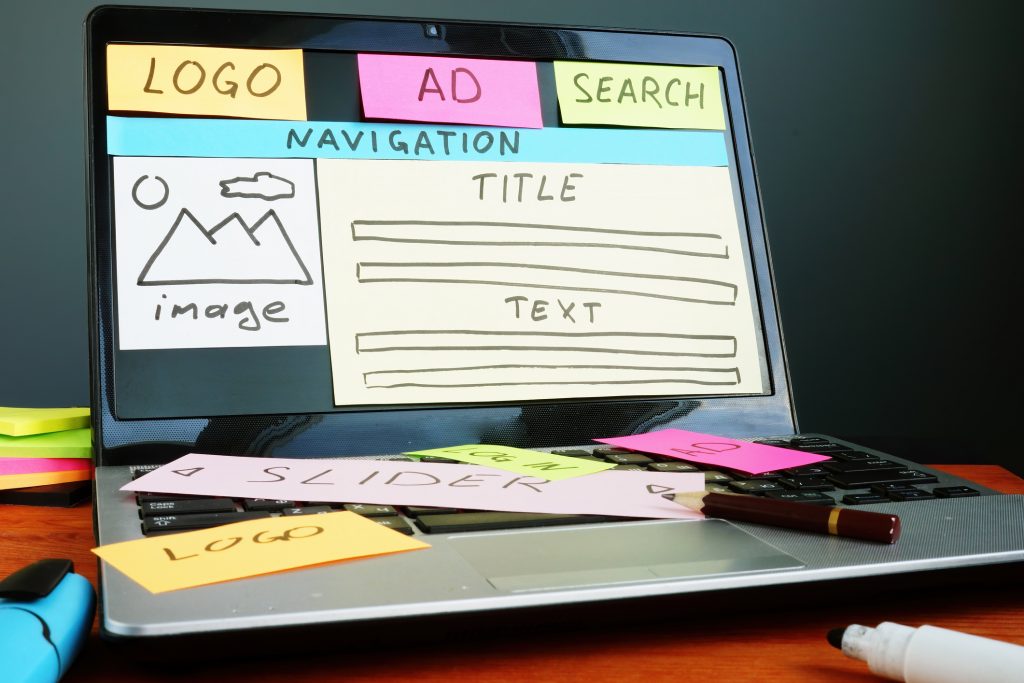
Website Navigation

You probably already have an idea of what makes a good and bad website, just from surfing the Internet as a consumer. When you browse a website, you expect things to be in certain places. For instance, almost every website has a menu to help direct you to the area that you’re looking for. Those sections usually look like contact information, store hours, products, and an about page.

Whether you’re online shopping or shopping in a physical store, having an organized layout is very important to the customer.

Website creative plan development with drawn sketch in the design studio.

There’s also your website’s UI (user interface) to consider. Other than having the right information in the right places, design can affect navigation too. Having consistent and aesthetically pleasing colour schemes on your website for backgrounds and copy is important for a few reasons.

Choosing a colour scheme or design that matches your brand and is pleasant to look at can make customers want to stay longer on your site. Just remember the copy needs to be easy to read too – you wouldn’t want to read dark words on a dark background.

Clear copy

A high-quality website isn’t all about visuals, even though it’s the most eye-catching part. Make sure you don’t neglect your copy either! Long sentences and dense paragraphs can seem intimidating and drive customers away. On the other hand, you want to make sure your website has enough content and information to satisfy the customer’s needs.

Ask yourself the following questions when you’re writing web copy:

  •   What is the call-to-action (CTA)? Identify the next steps your customer can take after reading through your text. Make sure the customer gains something from your content, such as learning more about a certain topic, or making a purchase. The CTA could also be as simple as clicking on a link to read more.
  •   Could an eighth grader read and understand this? Having readable content ensures your website is accessible to a wider audience. Tools like the Hemingway Editor can help keep you on the right track.
  •   What keywords should I include? When customers are looking for information on Google, they are likely to be using the same keywords in their search. Repetition of certain keywords in your web copy can increase your website’s exposure on search engine result pages.
  •   Am I writing from the user’s perspective? Consider your customer’s reasons for visiting your page. For example, is it to make a decision on making a purchase? In that case, you would want to highlight the benefits of your products or service. Don’t go off-topic!

Now you’re all set for revamping your website and strengthening your brand. If these are new concepts to you, don’t worry! Your website is something that evolves along with your business. Keeping track of your website’s audience engagement will help you make tweaks to your content. You can also see where your readers are located, which allows you to gauge interest for your product in other parts of the world. 

By keeping these basic design and copywriting principles in the back of your mind, you will have a good foundation to becoming export ready. 

Need help?

Export readiness means your business is well-rounded enough to succeed in new markets, including online ones. Export Navigator can assess your business’s export readiness and offer tailored, step-by-step guidance.

Talk to an export advisor and learn more about how you can expand beyond B.C. today. 

The Challenges and Opportunities of Exporting Goods

If done successfully, exporting is extremely rewarding. It can result in higher profits, economies of scale, and innovation. However, the reality is exporting does not come without its fair share of risks and challenges.

You may already know about how exporting out of British Columbia (B.C.) is especially advantageous. But before you go all in, it is essential to evaluate your business’s export readiness. Setting realistic goals and expectations for your business is key to avoiding costly mistakes.Graphic of challenges and opportunities of exporting

Even if you aren’t ready to export now, you can find out what you need to work on for the future! Export Navigator offers an excellent free e-course, Export Essentials, that covers all the basic topics you’ll need to know.

With that said, let’s jump into the opportunities and challenges that come with exporting.

Opportunities of Exporting

Market Diversity

B.C. is home to an array of unique and reputable businesses. The size of its market, however, is limited. By exporting out of B.C., you open yourself to many new opportunities across Canada and abroad. As a result, your business will become less dependent on the local market. You can also target global buyers online with a well-planned website and gain more prospective international customers. Entering more markets also allows you to make the most of the free trade agreements we have with other countries. The more diverse your market is, the more competitive your company becomes – both domestically and globally.

Economies of Scale

This term may be unfamiliar to you, but its meaning is relatively simple. Basically, it is possible to decrease production costs if you scale up production units.

Economies of scale are seen as a sign of growth. Exporting can make it easier to achieve economies of scale because you’ll likely face increased demand for your product over time. While it might not happen overnight, exporting can result in more cost-effective production.

Innovation

The global marketplace isn’t just for goods or services, but also for the exchange of ideas.

One major benefit of exporting is the number of creative opportunities you’ll have. Introducing your product to a new market stimulates competition, which leads to new ideas. For example, you might discover another way to improve your product or expand your product line.

Exporting requires you to think outside the box, but this doesn’t only apply to products. It enables you to also develop more streamlined business processes or try out new marketing strategies. Because exporting demands a bigger and better version of your business, it is an invaluable opportunity for professional growth.  

Challenges of exporting

As with any worthwhile endeavor, there are a number of risks and challenges that you need to consider before committing. It is important for you and your team to be fully aware of the time, money, and competition that’s involved in exporting.

Below are three major challenges of exporting, and what to expect for each.

Time

Exporting is an ongoing time commitment. Extensive research in different areas is required for making sure the export process goes smoothly. Some of the work involved is short-term, while others, like maintaining business relationships, are long-term commitments. Here are some of the areas you’ll need to spend time on researching:

  •   Rules and regulations in your target market
  •   Building and maintaining relationships with your new business partners
  •   Labelling and documentation required in your new market
  •   Transportation needs for your product, and related costs
  •   Paperwork
  •   Cultural differences in your new market and how they might affect the way you do business

Did you know? If you export food, pharmaceutical, or cosmetic products to the United States, it must first be recognized by the United States Food and Drug Administration (FDA).

Costs

Exporting is an investment that can be expensive. Make sure you are financially capable of funding your export-related activities and look for funding that your business is eligible for. There are also government grants, loans, and guarantees available if you need support. 

Hiring

You may find yourself needing some extra hands during some point in your export journey. Hiring more employees is one possible expense you could incur, especially as demand for your products increases. You want to make sure you can still respond quickly and effectively to customer inquiries and orders. However, that isn’t to say small teams can’t export – even a one-person business can export successfully!

Production

Higher demand means you should account for higher production costs. On top of making more units of your product, the number of associated costs will increase as well. You might need to spend on modified packaging and marketing materials in a new language, for instance.

Networking

Meeting potential buyers in a new market is a crucial step in exporting. Without having the right connections, it’d be difficult to establish your business’s presence in that new market. One way to meet potential buyers is through attending virtual or in-person trade shows, which can get pricey from registration fees and travel.

Market research

Before deciding on which market to enter, you have to see whether your business would be a good fit for it. You’ll gain insight on who your competitors are, the level of demand for your product, and your projected performance in that market. You will also need to know the profile of your average customer, the size of your market, and so on. That’s where market research comes in. For small businesses, this work is often outsourced to other companies, another expense to consider before you start exporting.

Competition

You probably already have a clear idea of who your competitors are in your local market. When exporting, you’ll also be dealing with a much wider pool of competitors in your new market. On top of that, you will need to meet the expectations of your new customers.

 Facing domestic and foreign competition is both a challenge and an opportunity. As mentioned earlier, competition often leads to developing innovative methods of making your product or business stand out. It is also a challenge because this could require more precious time and resources.

Getting support

Business owners may feel overwhelmed after learning about the complexity of the export process. It is common for these feelings to arise, especially as a first-timer with no outside help.  

Export Navigator aims to make exporting as approachable as possible for both newbies and those who already have some experience. No matter your exporting level, the program helps entrepreneurs save money, time, as well as by giving them a competitive edge. Talk to an Export Advisor today and learn about ways Export Navigator can support you and your business.

Exporting Services Versus Goods: What’s The Difference?

Exporting services can be an entirely different process than exporting goods. That’s why distinguishing between the two and classifying your business correctly is very important. It affects everything from crossing the border to improving your business.

In any discussion of international services, we need to start with some background. First, we will set aside the “international” portion for a moment to allow us to focus on service business generally. We begin with the difference between goods and services. A typical good is a manufactured product such as a smart phone. A typical service is not manufactured, like a haircut. We’ll see in upcoming posts a child’s haircut can provide an even better example of a service.

Drop It On Your Foot

One well-worn shortcut to discover whether a business is selling goods or services is the “Drop It On Your Foot” Test. If you can drop the product on your foot, that product is most likely a good. If not, it is most likely a service. This is because goods are often said to be tangible. They are material. They have volume, weight, and other observable traits. Services, on the other hand, are said to be intangible. Services are, in various ways, non-material. Services may have atmosphere, performance, attitude, opinions, etc.

As we prepare to administer the Drop on Foot Test safely, we can ask a hair stylist, “Just so this does not break my foot, how much does your haircut weigh?” The stylist will look at us with consternation because we are talking nonsense. By extension, we would be talking more nonsense if we try to compare goods and services by weight. Asking which is heavier, an overnight stay in a hotel or a coffee cup is ludicrous.

The coffee cup in the above example raises a thought. Let’s say a barista makes us some lattes. They create a performance. We can watch them. Some baristas are quite innovative in their performances. But you point out that each cup now has artwork in its foam – that is tangible. And the lattes each contain about a quarter liter of water. That weighs 0.25 kg and if that water is quite hot, we do not want to drop them on our feet! That’s a lot of tangibility, although we cannot weigh the barista’s performance.

This leads us to another consideration in selling services. We come to realize that each service business has a blend of “intangible elements.” Some businesses are dominated by their intangible elements, some businesses are very nearly selling goods. The more components of the final delivery that are tangible and material, the closer the business is to selling a good. Restaurants are a prime example. However, restaurants have varying degrees of “atmosphere.” Indeed, five-star restaurants have “much more” atmosphere than fast-food restaurants who in turn have more than vending machines. We can feel the atmosphere when we enter the five-star premises, but we probably should not ask the maître d’ how many grams of atmosphere they used on tonight’s 24-ounce porterhouse steak!

The Goods-Services Continuum

Lynn Shostack has developed a scale known as Goods-Services Continuum. We can see that a commodity like salt, sought by people since before recorded history, is probably the most tangible product. It is material and will remain so, even though it is a food product. It does not spoil. At the other end of the scale we see weather forecasting, a technology which we all will likely agree is still under development, is perhaps the least tangible product. After receiving a weather forecast, we have… nothing much, especially 24 hours later.

At this point, we need to make an important distinction between goods and services. We sometimes hear that “In today’s business world, every firm is a service firm!” We know all businesses that provide customer service will be judged by the quality of their customer service. But here is the distinction: customer service, or after-sales service, are not the same as the service products created by services businesses.

The academic business literature has made this distinction for the past 25 years with the aim to help both kinds of businesses. Studying services will help goods businesses isolate the elements of their business that are service-oriented and improve them. On the other side, service business owners can use this distinction to explore their entire operation: operations, people management, and especially marketing. As we will see in upcoming posts, many of these business processes are conducted differently in a services business.

Crossing The Border

Finally, we can now tie intangibility into international services. Intangibility makes crossing a border with a service different than a good. A service’s intangibility means both customers and border agencies cannot see it, weigh it, examine it. In future posts, we will look at how customers acquire international services. But we can say right now that border agencies adjust their protocols accordingly, creating special rules for service people entering their countries. Each country’s rules create mobility barriers. A mobility barrier stops the free passage of people across international boundaries and include visas, work papers, and other documents that must be filled out correctly. But here’s something working in the favour of service businesses – if we choose our international markets carefully, we may be able to take advantage of free trade agreements to keep mobility barriers to a minimum PLUS provide a means to report incidents where unexpected barriers were imposed.

In this first post, we have covered the difference between goods and services. This led us into the concept of the “Drop It On Your Foot” Test that helps us get a grasp on tangibility and intangibility. We saw that all services businesses have varying amounts of intangible elements that make up their service products.

Stay tuned for the next blog post in our export services series, where we will look at more differences between goods and services that can impact services delivery at home or abroad.

3 Exporting Myths Debunked

Many entrepreneurs strive for sales growth and security in their business. If your business plan doesn’t include exporting as a way to increase sales and diversify your market, you may want to consider incorporating it. Exporting is often overlooked as a viable option for small businesses due to common misconceptions. However, it can actually be a smart investment for your company’s future. That’s why we’re here today to address some of the doubts small business owners have about how to export from B.C. It’s more attainable than you might think!

Myth #1: My business is too small for exporting overseas

B.C. company Sea Spring Island Sea Salt, the only salt company in the world to offer a unique line of premium infused fleur de sel products.

There are a lot of benefits to exporting, but one major concern small businesses have is they do not have the capacity to export. The good news is, you don’t have to jump into exporting overseas right away, or at all. Selling to our neighbours in Alberta or in the United States from British Columbia (B.C.) counts as exporting too! Plus, doing so can grow your revenue and business over time. It’s always a good idea to diversify your market to protect your business from variables like local demand or foreign competition.

Size is no impediment to the exporting process. In fact, many solopreneurs are successful in the export field. As a small business, you can use your size as an advantage to appeal to a broader customer base. If you think your product is unique and special, chances are, other people think so too. Use that opportunity to market your goods as ‘specialty’ or ‘exclusive’. Another possibility for small business export growth is to start by entering a local supply-chain in B.C. This allows you to export as suppliers to larger exporters.

To fully explore all the paths you could go down, Export Navigator is a great starting point for beginners. The program connects small businesses in B.C. with an experienced export advisor, your personal guide to everything export-related. Your export advisor can help you develop a realistic market strategy, expand your business, and eventually, expand your market.

Myth #2: I don’t need to export

Many local businesses decide to stay local because they believe it doesn’t make sense for them to export. In some cases, that is true—for instance, exporting may not work for a hair salon or a restaurant. But more often than not, people are unaware of their business’s exporting potential. This is especially true if they are in a sector that is export-capable, such as local manufacturing, technology, and even tourism. Like tourism, some services may also qualify as exports. If the service has customers from outside B.C., this could make the business eligible for various exporting programs, services, or funding.

With the prominence of the Internet in all aspects of our lives, the number of customers opting to shop online only continues to grow. This presents a golden opportunity to grow profits that small businesses should pay attention to. While your traditional brick-and-mortar store isn’t likely to disappear any time soon, e-commerce is another increasingly popular avenue for potential sales growth.

Even though the retail landscape in B.C. continues evolving to accommodate online shopping trends, almost half of Canadian small businesses still don’t have a website. Having a high-quality website that’s easy to navigate is an invaluable tool for customers who want to learn more about a business. Establishing a strong social media presence is another great way to engage with and grow your customer base. One Export Navigator client, Rip’s Cleats, was able to increase revenue by an impressive 84% after starting an e-commerce site. Doing business online expanded their market to include customers from all over North America.

Myth #3: There is no export support and service that suits my needs 

Export advisor Michael Hoher working with founder of Popov Leather

There are so many facets to exporting: targeting export awareness and growth planning, skill development, opportunity identification, market entry, and more. This can make  it difficult for business owners to find the right fit for exporting services and support. Although a one-stop shop for every single exporting service doesn’t exist, Export Navigator can help assess your business and connect you with the right resources.

In addition, check out export support services from trusted organizations such as Community Futures BC, B.C. Food & Beverage, WeBC and local economic development offices. There are also federal and provincial supports available, like Export Navigator and Trade and Invest B.C.

Learn more

Still have questions about exporting? Talk with an export advisor and learn more about how to export today. Export Navigator is unique because it is the only program in B.C. that offers free expert guidance through every step of the way. Don’t miss out on the opportunity to get tailored advice and information for your business!